Report of the Fourth National Conference on the Oral History of the Sacred Defense (3rd and Final)
The Importance of Maintaining Confidentiality in the Oral History of System Officials
Compiled: Maryam Asadi Jafari
Translated by: Fazel Shirzad
2025-3-19
Note: According to the Iranian Oral History website, the “Conclusion of the Fourth National Conference on the Oral History of the Sacred Defense and Resistance” was held on Saturday morning, March 24, 2025, in the presence of oral history activists, in the Qalam Hall of the National Archives and Library Organization.
The third article presented at this conference, titled “The Requirements and Challenges of Expressing Classified Materials in the Oral History of Officials and Agents of the Islamic Republic of Iran System; Collection to Archive,” which was compiled by Mojtaba Nikrahi, Abdullah Esmaili, and Ammar Partovi, was explained by Mojtaba Nikrahi as follows:
“The election of officials is one of the most decisive executive actions in the political system, and the ability and behavioral health of officials are among the most important factors in the proper organization of social and political affairs. Classified documents are divided into 4 categories: “confidential,” “top secret,” “secret,” and “totally secret.” "Top secret documents" include documents whose unauthorized disclosure would cause irreparable harm and damage to the organization. "Secret documents" also include documents whose unauthorized disclosure could jeopardize the organization's interests and provide significant benefits to competitors. "Top secret documents" include documents whose unauthorized disclosure would, in addition to harming the organization's public interests, cause problems in the conduct of administrative affairs. Disclosure of "confidential documents" will also jeopardize the organization's interests.
The penalty for disclosing confidential documents in the oral history of officials varies by law, depending on the case, and the law provides for imprisonment. Disclosing secrets and confidential documents is mainly related to confidential government and administrative documents. Therefore, their commission is possible only by certain individuals and does not include the general public. Confidential documents and classified information have different levels and the law has limited access to them. For this reason, only government officials have access to it and must be extremely careful in preserving it.
The challenges of expressing classified material in the oral history of government officials are as follows:
Fear of disclosure of confidential information: Officials may worry that they will inadvertently disclose confidential or sensitive information. This fear may prevent them from participating honestly and fully.
Concern about political consequences: Some officials may fear the consequences of their statements, especially if their narratives conflict with the official narratives of the government. This concern can lead to self-censorship or refusal to participate.
Maintaining status and credibility: Some officials may worry that their statements will negatively affect their political or social standing. This concern may cause them to refrain from providing details.
Lack of trust in interviewers: Officials may lack trust in interviewers. This lack of trust stems from a fear of misuse of information and distortion of narratives.
The challenges of collecting and archiving the oral history of regime officials are as follows:
Challenges of access to sources and interviewees: This challenge is related to the access of regime officials, political-security restrictions, and the reluctance of some of them to participate in oral history.
Challenges related to the accuracy and credibility of information: This challenge is related to the accuracy and credibility of memories and information provided by regime officials and agents, personal and political biases in interviews, as well as the analysis and evaluation of contradictory information expressed.
Technical and methodological challenges: These challenges are related to standard methods and the use of new technologies in interpreting and analyzing the oral history of regime officials.
Challenges related to archiving and access by future generations: How to archive and store documents and interviews for the long term for future generations, as well as preventing unauthorized access to sensitive and confidential information, is part of this challenge.
Personal and legal challenges (privacy aspects): These challenges are related to ethical and privacy considerations in collecting and publishing oral history.
Challenges related to historical interpretation and analysis (distortion): These challenges consider analyzing and interpreting oral history information alongside other historical sources, dealing with possible distortions and biases, and adapting and correcting historical narratives.
The method of recording and archiving oral history of officials in the system should be done with the following points in mind:
The set of actions that officials take from the beginning of their responsibilities until the date they leave the secret and confidential status are classified as confidential or secret documents. Unauthorized persons should not access these documents or become aware of their contents. The methods of maintaining oral history in each organization will be determined according to the requirements of their duties and the quality and quantity of the documents they have. The location of the archive of the transcribed material and the original audio or video file should be determined by officers of the higher-level or security agencies.
The following points are noteworthy in maintaining the confidentiality of the material in the oral history of the regime officials:
Informed consent: Before the interview begins, the narrators should be fully explained how their information will be collected, used, and published. This explanation should include items such as: the purpose of collecting the information, how it will be used, the possibility of others accessing this information, and the duration of its storage. The narrators should voluntarily and knowingly declare their consent.
Access restrictions: The collected information should only be available to those who need it, and unauthorized access should be prevented. This is done by encrypting files, using security systems, and restricting access to the archive.
Removing or changing sensitive information: In some cases, it may be necessary to remove or change sensitive or identifying information about the narrators, such as names, specific locations, or personal details, to protect their identity. This is especially important when releasing the information would pose a risk to the narrator or others.
Determining the level of confidentiality: Some information may be publicly available, while others should be kept confidential. The level of confidentiality of each interview should be determined and based on that, decisions should be made about how and to what extent it should be made available.
Secure storage of data: Collected data should be stored in a secure environment to prevent unauthorized access, theft, or loss. Using secure servers, regular backups, and the use of security software are ways to keep data secure.
The following are strategies for addressing the political and security sensitivities of government officials in expressing oral history: Establishing trust with interviewees: Interviewers should establish a close and trusting relationship with officials. Assure interviewees that the information will remain confidential until the appropriate time.
Establish clear boundaries for the interview: Before starting the interview, thematic boundaries and red lines should be defined so that the interviewees feel safe. This will help reduce concerns about revealing sensitive information.
Collaboration with official institutions: Enlisting the support of official institutions such as the Ministry of Culture and National Archives can give credibility to the project and help reduce security sensitivities.
Use confidentiality rules: Developing and enforcing confidentiality rules is essential to protect interviewees and organizations. Interviewees should be assured that their information will not be published until a certain time.
Emphasizing the historical significance of the project: Explain to officials that their participation in recording oral history is a service to future generations and the preservation of national heritage. This approach will increase motivation for participation.
Use of indirect methods: In cases where sensitivities are very high, indirect methods can be used, such as: collecting memories through writings, documents, or interviews with those close to the officials.
Clarify the goals of the project: Interviewees should be assured that the goal of the interview is to record history; not to create a crisis or reveal secrets. Clarify the goals will help reduce resistance.
Graduality of the process: This means starting the project with less important people and issues and then expanding it to more sensitive issues. This approach helps build trust and reduce resistance.
***
Using oral history to improve the current situation
The last article, titled “A brief look at determining the roadmap for the oral history of the Sacred Defense, based on the role and performance of government, private, and public institutions and organizations,” was compiled by Rasoul Yahi and Saeed Shir Mohammad Ali. Rasoul Yahi provided a summary of this article:
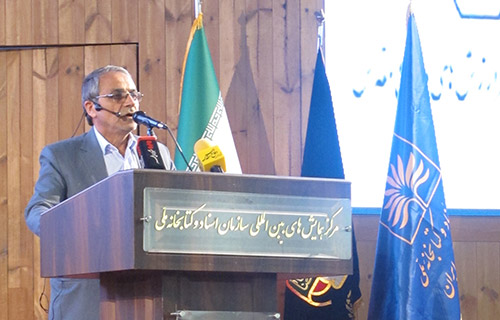
This article follows three axes: "appropriateness", "roadmap" and "purposefulness of oral history". In the space of developed countries, usually out of 100 units of available resources, 65 units are allocated to the future, about 20 to 25 percent to the present and 10 to 15 percent to the past. I think we should use this approach in oral history. The exact statistics of the martyrs of the war are about 9,089 army personnel, about 29,026 IRGC personnel, 2,926 police personnel, 26,293 government personnel, 6,000 women and 4,564 non-Iranians. Regardless of the fact that the war we fought about 40 years ago is an obsolete war - because the invasion of territories by tanks, the movement of fighters and the support and fire support no longer have a place for the Arabs; Except in special cases - my emphasis is to see what proportion there was between the presence of individuals during the Holy Defense. When public opinion talks about war and defense, minds turn to the IRGC, the army, and the military and law enforcement forces, but in academic circles, the talk is that between 7 and 12 people must support a fighter so that he can carry out his mission. The oral history of these 7 to 12 people has so far been neglected. How can we establish this proportion? From now on, we must create a roadmap for oral history so that all people active in the war have their oral history recorded and recorded; with the specification of how their experiences can be used to govern the country and the future. I am the executor of the government project in the Holy Defense. Inflation statistics in 1983 were about 6.9 percent and in 1984 it was about 10.4. During the 8-year Holy Defense, the average inflation in the Islamic Republic was about 20 percent. In my opinion, one of the tasks of oral history today is to interview the economic officials of that time and now that we have an inflation crisis, we should extract and use the solutions for running the country in those war conditions. We must see the problems of today's society and use the solutions extracted from oral history in this regard.
The 6 key questions for preparing an operational solution in oral history are as follows:
Who, when, where, what, how, why should be included in oral history. Why should all commanders of divisions, brigades, and battalions be interviewed? How much parallel work do we do in the field of oral history of the war and what is the use of it? If we had unlimited resources, it would not matter, but now that we have limited resources, we must use the resources for the right purposes.
The system of issues of the oral history of the Sacred Defense includes: military experiences and statesmen, engineering, women, engineers, people, clergy, teachers, students, the effects of war on society, families, and the experiences of refugees and displaced persons of the war, the political-social-cultural and artistic experiences of the war. We are even today affected by the war. The children of martyrs and veterans, the existing abnormalities, are the result of the war. We must accept that all members of society were affected by the war and should be considered in oral history.
The suggestions we have for developing a roadmap are:
Preparing and developing an oral history roadmap, preparing and developing an operational plan for the oral history of the Sacred Defense and determining the contribution of each institution and organization based on the statistical population and geographical regions, preparing a system of main and secondary issues for the oral history of the Sacred Defense, preparing a system for measuring and evaluating the consequences and effects of the oral history of the Sacred Defense, translating and publishing superior oral history products at the regional and global levels, paying attention to the production of products specifically for children and adolescents, and paying attention to the indirect effects of war on members of society.
The End
Report of the Fourth National Conference on the Oral History of the Sacred Defense -1
It was raised at the "Fourth Conference on the Oral History of Sacred Defense"-2
Number of Visits: 2146



The latest
- Third Regiment: Memoirs of an Iraqi Prisoner of War Doctor – 35
- Rahim Afshar's Memories
- The Story of the First Sacred Defense Book Award
- Oral History and Social Resilience in Hard Times
- 100 Questions/ 34
- Third Regiment: Memoirs of an Iraqi Prisoner of War Doctor – 34
- A Review of Scientific and Operational Strategies for Overcoming the Erosion of Narrators’ Memory
- 100 Questions/ 33
Most visited
- Third Regiment: Memoirs of an Iraqi Prisoner of War Doctor – 33
- Expert Panel Session on Oral History of the Country – (Part 2)
- 100 Questions/ 33
- Memoirs of Ahmad Nabavi
- A Review of Scientific and Operational Strategies for Overcoming the Erosion of Narrators’ Memory
- Third Regiment: Memoirs of an Iraqi Prisoner of War Doctor – 34
- 100 Questions/ 34
- Oral History and Social Resilience in Hard Times
Validation: Challenges and Necessities
Where does truth stand in oral history? How can the correctness of a narrative be recognized? Does fact-checking matter? If there is exaggeration in the reporting of some accounts, how can it be detected? Is it possible to record an event accurately through the recording of a narrative? Readers and users of oral history works are often faced with these questions, and sometimes encounter doubts about some oral history works.From Revolutionary Circles to the Military Arm of the Islamic Government
In those days, it became clear that certain institutions had to be established very quickly—institutions suited to the temperament, expectations, and lingering aspirations of the younger generation; young people who had been politically active before the Revolution and, in some cases, had been directly entangled in arrests, imprisonment, ...Authenticating Oral History: From Possibility to Necessity
The use of oral history as one of the historical sources has long been one of the principal challenges facing oral historians and those who employ it in contemporary historiography. The development of international standards for oral history, as well as IRIB standards, was intended to address the criticisms raised in this regard. The relationship between Diplomatics in written records and oral history is reciprocal.100 Questions/27
What is the place of research ethics in compiling oral history?We asked several researchers and activists in the field of oral history to express their views on oral history questions. The names of each participant are listed at the beginning of their answers, and the text of all answers will be published on this portal by the end of the week.