
Report of the 15th Oral History Conference; Religion and Culture -2
Differences in Moral Concepts of Religion and Oral HistoryMaryam Asadi Jafari
Machine Translation Edited by Mandana Karimi
2026-06-29
According to the Oral History website, the 15th Iranian Oral History Conference on the topic of “Religion and Culture” was held on Thursday morning (June 11, 2026) with the participation of the Iranian Oral History Association, the National Library and Archives Organization of Iran, the Islamic Research Foundation of Astan Quds Razavi, and the Islamic Revolution Archives Center of Qom, at the Fadak Hotel in this city.
Oral History, Culture, and Religion; Sides of a Meaning-Making Triangle
In the second part of this conference, “Dr. Ali Tatari” and “Dr. Morteza Mirdar” attended as the moderators of the first specialized panel. Ms. Peymaneh Salehi presented her article titled “Thematic Relationships in the Oral History of Culture and Religion from a Macro and Micro Perspective” online. The following is an excerpt from the words of this oral history activist: "My goal in writing this article is to establish a dynamic relationship between the components of culture and religion with oral history, in order to present a comprehensive graph of the thematic relationships of oral history, culture, and religion. I designed this network graph based on the review and analysis of library resources to ultimately show how the voices of the public become the center of culture and religion through the lens of oral history.
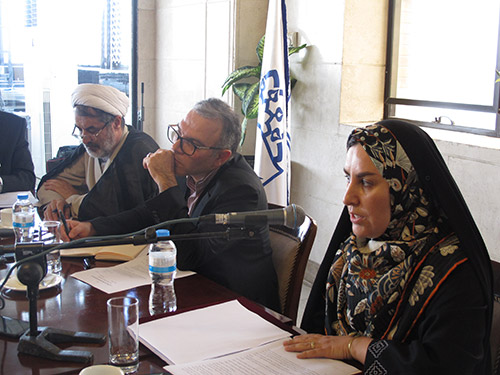
The collective memory of a society stabilizes and makes the cultural identity of the people transferable. In addition, the tangible and intangible culture of a society is documented in this way. Oral history, in the context of religion and culture, is considered one of the best methods of transmitting religious values. In other words, religion gives life to oral history, and culture gives it a tangible form. Regarding the horizons ahead for the oral history of culture and religion, we can say: Recording speech, metaphor, silence, and suspense in the language of narration create the structure of the oral history of culture and religion and transform the subjective knowledge of narrators into objective knowledge. In addition, the data obtained from interviews that are related to sacred places create a spiritual connection between people and religious teachings. Gender differences in narration, such as the role of women in mourning rituals, also create a new form of religious historiography. Oral history, culture, and religion are the sides of a meaning-making triangle, each side of which is incomplete without the other. If I were to mention oral history as a method for culture and religion, oral history becomes a tool for analyzing the semantic networks that they create in the field of culture and religion. In the field of culture, we can also analyze narrative patterns in local legends and stories using the oral history method. The second component is the relationship between culture and religion as a context and background for oral narration. In other words, no oral history narrative is formed without a background, and each narrator thinks and speaks within a specific cultural and religious tradition. The third component is that culture and religion are both the context and the product of the same narrative.”
Ethical Challenges in Interviewing Oral History of Religion
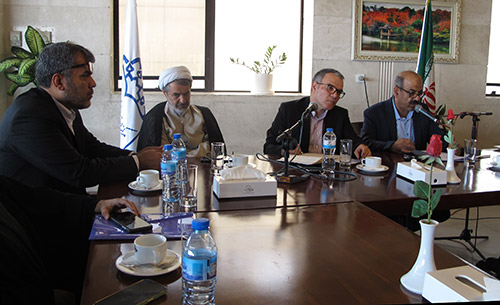
The second panel at the 15th Iranian Oral History Conference was held under the direction of “Hojjatoleslam Saeed Fakhrzadeh” and “Dr. Mahmoud Sadat.” Sadat stated at the beginning of this panel: “In oral history, the principle is to collect eyewitness accounts, and the more complete this account is, the more successful we are. It is emphasized that before starting the interview, we should see the documents and evidence related to the event and sit down with our hands full in front of the narrator. Wherever it goes beyond the scope of the narrative, since we are informed and have seen the documents, we can find the correct narrative. However, in the field of religion, there are a series of ethical considerations. Especially when someone is going to present a narrative from the position of religion, ethical considerations such as backbiting and slandering become more colorful in the field of oral history of religion. The need to cover up is a moral concept. However, in oral history, our principle is not based on this. When we want to adapt religion and oral history, we face numerous challenges. The second article, titled “Ethical and Methodological Challenges of Producing Religion and Oral History in Cultural Narratives from the Perspective of Oral History and Media Practitioners,” was presented by “Hassaniyeh Sadat Mahdavi,” an excerpt of which is as follows: “This article addresses the challenges facing oral history, especially in topics such as culture and religion. Because the religious and cultural memory of many societies is transmitted in the form of testimony, narratives of spiritual experience, and local stories. For this reason, recording it requires a special methodological and ethical sensitivity. The combination of oral history and religious subject matter requires a deep understanding of the emotional boundaries of the community, and the interviewer must transmit and record the language and semantic load of the narrative as the narrator experiences it. This sensitivity is especially true in topics related to belief, holiness, and spiritual experiences. In this article, a qualitative-exploratory research was conducted and the data were collected using semi-structured interviews with 11 activists from both fields who were selected through purposive sampling and had more than 10 years of experience in the media or oral history fields or both. The findings showed that according to the questionnaires, 4 main themes, 10 sub-themes and 2 codes were identified and the activists expressed common points and terms in relation to religion and culture, which although they have the same appearance, each defined and limited it with specific characteristics according to their own field of work. Mahdavi continued by comparing interviews, narration, subject finding, impartiality, audience and editing in media and oral history, as well as the challenges of these two fields. Then Dr. Mahmoud Sadat emphasized: “A news interview is different from oral history, and I think the discussion you raised in this article should be separated. What a journalist does in a news interview is a little different from the standards of oral history, which are to produce data for future historians, which were mixed up in your discussion. The second point in a news interview is that reputation is important. However, in theoretical discussions of oral history, the principle is to go to the silent ones of history, which do not read together. One of the specific challenges in the oral history of religion can be the killing of people in war and martyrdom. This example requires very careful work. When a person is suffering, should we go to him immediately or do it a little later? Which narrative is closer to reality? These issues are very debatable. “Transmission of Razavi Rituals from Chest to Chest
“Kimiya Kesht-Ara” as the third presenter of the article, addressed “Explanation of the Function of the Scientific and Educational Center of the Islamic World in Isfahan City; Relying on Oral History” and after that, “Dr. Abolfazl Hassanabadi” presented his article titled “Functions of Oral History in Documenting the Family History of Holy Places in the Shrine of Imam Reza (AS)”, an excerpt of which can be read below: “My speech and Dr. Gholamreza Azari Khakster are, in a way, the history of the oral history of Astan Quds Razavi. The oral history of Astan Quds has a history of 27 years and is now between the first two archives of oral history in the country with more than 27 thousand hours of interviews. In the field of oral history of holy places, more than 2 thousand hours of interviews have been archived, which is rare in Iran in the field of holy places in the past 20 years. My approach in today's speech is family history. Family history and clan history are different. We have a lot of family history. In the world, they are one of the main branches of oral history. However, clan history has a different meaning. Clan history is not easily formed. Time must pass and deepen. We believe that Astan Quds Razavi is one of the largest centers of clan history in the world. Because it has a 500-year history of hereditary service and the families that have served in the shrine. Their history is also fully documented. That is, some of these families have been servants since the Safavid era and are still serving. This is a great potential subject, whose documents are available in the Astan Quds Razavi Document Center, and from this perspective, the clan history of the shrine can be considered. In fact, we examined the effect of working in holy places on the sub-religious and religious life of families who served in the shrine for several generations. What effect did serving in the shrine have on their spiritual life and life? This includes neighbors, servants outside Mashhad, or deputies. When we look at family history from this perspective, we come to some interesting points. One issue is the issue of place belonging and connection to the field of religion. Being present in a religious place in a process, as well as hereditary service, creates a very strong spiritual and communication network that maintains the roots of the group's identity.
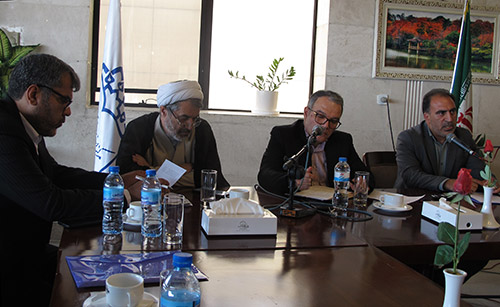
The discussion of the formation and expansion of the use of oral history in this context is very important: First, the transmission of values and beliefs is important. In these hereditary families, beliefs have been formed that, despite differences in perspective and even differences in life, have been passed down from generation to generation and are latent. However, this belief has been created in them and has value. Second, there is the issue of honor and social status. Many of them have defined their social status and dignity in the structure of holy places. The issue of collective family memory is also important. The personality of many of these families has been formed in the heart of holy places, which has led to the creation of a historical identity for them and they have been included in the ranks of famous families. Also, creating a bond with the larger community is formed in the heart of these holy places, and the research and educational role that is formed in a decentralized and indirect way, from the communication process in the places, is an important issue, and we hope that the discussion of oral history in holy places will also be formed in the shrine of Hazrat Masoumeh so that it will also be useful for activists in the field of oral history. Furthermore, Dr. Gholamreza Azari Khakster also explained his article titled “Reviewing Religious Rituals in the Razavi Holy Shrine with Emphasis on the Narrative and Lived Experience of the Servants and Farashans.” An excerpt from this presentation follows: “The history of religious rituals in holy places is long, and documents show that since the Safavid era, we have witnessed ceremonies such as drumming, or the sermon of handing over the guards, or sweeping the floor in the Holy Shrine, and these ceremonies have continued. The most important issue in this research was to examine the factors and reasons for the continuation of religious rituals. These Servants, Farashans, and people who were engaged in the Razavi Holy Shrine have borne a heavy responsibility. They have taught these rituals to their children from generation to generation, and these rituals have continued. The aim of this research is to record the oral narration of the servants of religious ceremonies, identify the families that were influential in holding the rituals, the role of hereditary servants and service structures in intergenerational transmission, and provide scientific data for researchers. Despite numerous documents in this regard, we concluded that the only way to access the hidden layers of religious rituals is the oral history method. We have no trace of them in texts and documents, and it is oral history that was able to revive this process, show the servants’ narration, and prove that these rituals were transmitted based on practical experience and transmission from chest to chest.
At the end of the second panel of the 15th Iranian Oral History Conference, Hojjatoleslam Saeed Fakhrzadeh stated: “We have about 80,000 mosques and thousands of Tekiyes (Mourning halls), Imamzadehs (Holy Shrines), and seminaries throughout the country. All of these are known as sacred and religious places, and the initial impression is that they are centers of worship. However, in addition to this function, these places have also played a role in the local economy, education, culture, identity, collective memory, and socio-political activities. So far, many books and research have been done about these centers, but most of them are about architecture and. and less has been done about the events. Topics such as: recording the memories of the trustees, the board of trustees, the imam of the congregation, the servants, the clergy, the endowments, and the merchants around the mosques are lesser-known dimensions that can be entered into their oral history and will provide us with data so that our cultural planners can plan for the development and growth of religious activities based on this data.”
To be continued …
Number of Visits: 633
http://oral-history.ir/?page=post&id=13346