Interview with Jowa Avdić
The Family of Hosseini and the Family of Avdić, Khoramshahr and Srebrenica
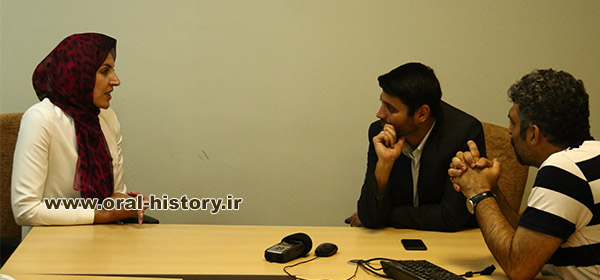
Interviewer: Mehdi Khanbanpour
Translated By: Fazel Shirzad
2018-8-21
Note: Jowa Avdić, the author of book "My Smile Is My Revenge", was born on August 26th, 1986 in "Zeleni Yadar", near Srebrenica. With the Serbian invasion to Bosnia and Herzegovina and the beginning of the war, Mrs. Avdić and his family are forced to immigrate to Srebrenica. At the time of the fall of Srebrenica, she was only 9 years old. He believes that for all those who survived the death of Srebrenica, tolerance for years of peace is far more difficult than the days of the war because they had become homeless in their homeland.
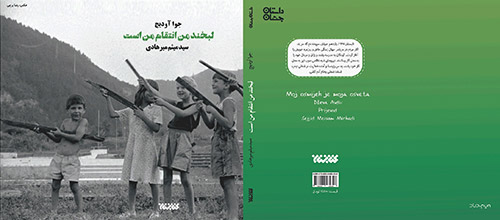
Jowa Avdić completed his education in political science and field of journalism at the University of Sarajevo, after graduating, he worked as a reporter in the newspaper named "Danoni Voice" in Bosnia and Herzegovina. But the effects of the war and the kind of look at the people of Srebrenica did not leave him alone. This led him to write the book "My Smile Is My Revenge" so that the narrator to be as pattern of all the hardships and difficulties that all survivors of Srebrenica were faced with them daily after the end of the war.
When the translation of book "Da" was being unveiled in Bosnia and Herzegovina Jowa Avdić said about comparing the disaster of Srebrenica with the events of the imposed war in Khorramshahr:" Those who have passed the horrors of the days of the war and survived, now speak in every language, and everywhere in the world they understand each other better. It was destined to read the translation of the book "Da" by the Iranian writer in March 2017. By reading the book, I found that the same history in two different periods took us. The sentence "history will be repeated" is not just an ordinary sentence; its evidence is living witnesses and the fate of humans; Iran in 1980s and Bosnia in 1990's. The book "Da" and book "My Smile is My Revenge", have been written for the victims so that the crimes of the criminals cannot be forgotten forever it should be repeated until the end of the world.
It is an opportunity for Iranian oral history site to talk to Mrs. Jowa Avdić
■
● Mrs. Jowa, tell about me some of Srebrenica's hard days!
My memory is about the time when we left Srebrenica (July 11, 1995). My father, who had involved in a battle, recently returned. We lived in a house in Srebrenica, of course, there wasn't house for us. Some of my father's comrades entered this house to take some tools and then go. The city had fallen and their lives were in danger. I was not yet nine years old and I could not understand that it would be our last visit with father. My father hugged me and I convoyed her. After the departure of my father and his friends, and in the noise of city I heard someone cried: Srebrenica fell. At that moment my mother took my hand and my brother's hand and drove out of the house without taking any device. The crowd was coming out of town. We joined the crowd, without knowing where we are going and having a clear goal. We came out of the city along the crowd, without knowing the fate that was waiting for us.
My mother, brother and I took two nights in Fotojarik. My mother did not sleep and saw the worst crimes. The Serbs separated the men inside the crowd and killed them. The third day we went to the buses that were going to move the crowd. My brother was 12 years old, and luckily we took him with us. If we had stayed in the Fotojarik on the third day, my brother would be definitely killed.
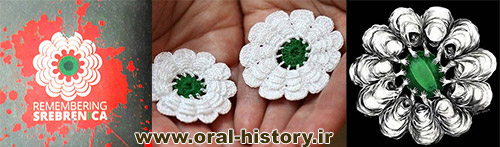
● could you explain about the logo is installed on your clothes?
It names "The flower of Srebrenica", and this is a flower about the crime that happened in this city. More precisely, it is a symbol of keeping memories of the victims of the Srebrenica disaster. Not only Srebrenica, but also a crime that has occurred all over Bosnia. This is the symbol of 11 mothers of martyrs circling a martyr coffin, a reminiscent of July 11, because there are still families whose loved children have been disappeared. The green color is a sign of these people's coffins.
●You have read book "Da". What impact did it have upon you?When I read the book "Da", I realize my book's introduction. "Da" is the first book I read from the literature of Iran. When I read this book, I felt as if I were the narrator of this book. In my opinion, the story of Zahra and Jowa is a story that is alike and similar, and there is difference that Zahra, when the war began, was older and naturally more responsible.
● Do You travel to Iran for the first time?
Yes
● What is the view of Bosnian people to Iran?
It is very friendly and the people of Bosnia know what great work Iranian people have done to them.
●What is your job?
I am a bank employee, but I have educated in the field of journalism and public relations.
● Thank you for spending time to talk us for a few minutes with all the fatigue of traveling
I also thank you and all the people of Iran. Given that about 20 years have passed since the days of our war, they still remember our martyrs, and this is very valuable.
Number of Visits: 6786
Share


The latest
- Narrative and the "War of Narratives" in the Era of Resistance and Imposed Wars
- Memories of Mohammad Boloori
- Call for Fundamental Questions in the Field of Oral History
- 100 Questions/49
- The Third Regiment: Memoirs of an Iraqi Prisoner of War - 49
- Jasem Ghazbanpour's narration of the first day of the war in Khorramshahr
- Memoirs of Ali Fadaei
- The Relationship Between Oral History and Biography
Most visited
- The Third Regiment: Memoirs of an Iraqi Prisoner of War - 48
- 100 Questions/48
- The Relationship Between Oral History and Biography
- Jasem Ghazbanpour's narration of the first day of the war in Khorramshahr
- Memoirs of Ali Fadaei
- The Third Regiment: Memoirs of an Iraqi Prisoner of War - 49
- 100 Questions/49
- Memories of Mohammad Boloori
100 Questions / 43
How can narrators and interviewers reach a common understanding?We asked several researchers and activists in the field of oral history to express their views on oral history questions. The names of each participant are listed at the beginning of their answers, and the text of all answers will be published on this portal by the end of the week.
Documentary Pathology of the US Embassy Documents
The Necessity of Scientific Rereading and Content Analysis of DocumentsMore than four decades have passed since the publication of the first collections of documents from the US Embassy in Tehran. However, despite the relatively easy access to this treasure trove of documents, systematic research exploitation of it has not been adequate. We still do not have a “comprehensive picture” of the content of these 11,000 documents.
100 Questions / 42
What is the importance of the narrator and interviewers shared understanding of the past in oral history?We asked several researchers and activists in the field of oral history to express their views on oral history questions. The names of each participant are listed at the beginning of their answers, and the text of all the answers will be published on this portal by the end of the week.
Validation: Challenges and Necessities
Where does truth stand in oral history? How can the correctness of a narrative be recognized? Does fact-checking matter? If there is exaggeration in the reporting of some accounts, how can it be detected? Is it possible to record an event accurately through the recording of a narrative? Readers and users of oral history works are often faced with these questions, and sometimes encounter doubts about some oral history works.