Live History: A Study of 40 Years of Oral History of the Islamic Revolution and the Holy Defense – 5
An oral history interviewer should be professional
Maryam Rajabi
Translated by M. B. Khoshnevisan
2019-4-16
According to the website of Iranian Oral History, the second session of the meeting " Live History: A Study of 40 Years of Oral History of the Islamic Revolution and the Holy Defense" was held in the Qasr-e Shirin Hall of the Islamic Revolution Museum and Holy Defense on Tuesday 5th of February 2019 attended by Hojjat al-Eslam Saeed Fakhrzadeh, Habibollah Esmaeeli and Morteza Mirdar. In the previous part of the report, you read the words of Hojjat al-Eslam Saeed Fakhrzadeh who was in charge of the Oral History Department of the Office of the Islamic Revolution Literature for years and Habibollah Esmaeeli, the history researcher and author.
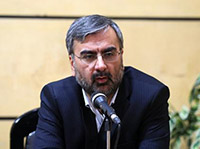
In continuation of the second session of the meeting " Live History: A Study of 40 Years of Oral History of the Islamic Revolution and the Holy Defense", Morteza Mirdar, the Deputy Head of the National Library and Archives of Islamic Republic of Iran said, "The academic information of the friends who work in the area of oral history is less about the past. I recommend them to study historical books in the area of Hadithology which have been written since the first and second centuries until the end of the twelfth century. The hadith scholars in those books have set a framework for themselves. In order to be aware of the narrator's credibility and to prove it, we need the style and method of the past. When a man notices nothing through reading books, he or she should start learning. For instance, in the area of news, he or she should know what the single and successive news are. Those who work in the area of Hadithology are skeptical in the credibility of the person who narrates a hadith from the Imam, but put pressure on him or her so much in order to say that our narrator is just. In cultural and scientific works, the moves are very slow.
In this oral history atmosphere about which we are speaking, an approach has been found and the categories remained in the areas of politics, community and so on are discovered. Our religious culture and belief says that a faithful does not do a wrong thing. He or she carries out ideological and valuable works, so the more secret is the things he or she do, the more valuable they are. Thus, many of those who present in the war and Islamic revolution do not accept to be interviewed and say that we did it for the sake of God. Now, how can you take the direction to other direction and say that my brother! You have to be present here and if you are not, it's the concealment of right and truth. The people who have been present in various developments, the people who have been present in a historical event and have seen the whole angles, are convinced very hard to speak, but there are people who speaks with one phone call. Someone who is supposed to carry out a scientific work for us, should know history, geography and the whole interdisciplinary subjects. Suppose a triangle one angle of which is a subject, the other a narrator and another one an interviewer. The narrator is present and there is the subject; complete the other angle; with whom do you complete it? At present, in the institutions and the places where you are told to take this tape recorder and go and complete the work. This is an oppression to historiography of the revolution. They in the province and different places want to create a working report for themselves. Although we say sometimes that the same work is admirable, no historical text comes out of it.
A historical event happened on 2nd of August 1953 and that was the attack on the house of Ayatollah Kashani. Enough historical texts were produced in this period and passed until 12 years ago when we received the dossier of the attack on Ayatollah Kashani's house for the police. An incident happened and Mr. Haddadi was killed there. Those who had a nationalist or pro-Mosaddeq views, said that Ayatollah Kashani was killed by the people close to him. This has been repeated many times in the texts produced by the. When we saw the police documents, we found out that in the documents, all have said that Mr. Haddadi has been a follower of Mr. Kashani and that he has been killed by a person in the document. Tens of people had testified in the courts and different places that he had killed Hasan Haddadi. Now we want to produce oral history for a subject whose text and document are available. There were many people at that time who have died now. Or regarding the historical letter of Mr. Kashani to Mosaddeq, the nationalists say that the letter is not authentic at all; why? Because Mr. Salemi who has delivered the letter to Mosaddeq has been in prison. How has someone who has been in prison could do this? Many years passed and Mr. Salemi left the country after August 21 coup and lived in Germany. He came to Iran a few years ago and brought the documents. He said those who say that I was in prison on that day, are right. I was released on 16th of August at 14. This man comes and narrates the event and the others say this is fake. He says that I was in Qasr Prison and you can go and check the historical documents.
Those who work in the area of oral history should have high IQ and you cannot do an oral history by just a tape recorder. After the exile of Imam Khomeini (God bless his soul), Hassanali Manosur (the then prime minister) was assassinated by the Islamic Coalition Party. In at least ten narrations from different people collected by us, it was claimed, "I went and received the fatwa for Mr. Milani." (those people are specified). I asked to go to Qom right now and get a fatwa for doing something, is it possible to get a fatwa for doing something so easily? They imagined for themselves that I received the fatwa from Mr. Milani. I conducted some ten to fifteen interviews in this regard and received such things. In the subject of oral history, we have a general discussion, and sometimes we also work deductively and partially; the hard work of the historian and oral historian is here. The narrator has done a work in 50s, 60s or 70s, and when he or she wants to narrate it, it is a showoff and a social credibility for him or her; he says this was me who took the fatwa of killing Mansouri. Oral history moves forward with a hint in some cases. For instance, we ask who has given the gun for doing this. Mr. Falsafi said that I connected Mr. Hashemi Rafsanjani to Mr. Toleet who has done many things during the revolution, the gun that Mr. Rafsanjani owns, has gotten from Toleet. Mr. Hashemi wanted not to ask him frank questions and he had also another excuse about which he spoke just after the camera went off. Or for example, consider the Committee for Welcoming Imam Khomeini; the person who has just one armband says that I a member of the committee, Mr. Motahari also says this, Mr. Rafiq Doost also says that I was there. The point here is that part of this refers to the characteristics of we the humans. For instance, someone says that I went and said this to the Imam and I ask him what your status was that you told him this? What does the audience receive by this? He with this word wants to create a value ad obtain a credibility for himself. When he was asked precisely, he says that I just said something for myself! The work of oral historian is to impale such people. If an interviewer is not professional, he or she is on the chopping block and has produced a text which is fake in history and later, we find out over a period of time that it's been a lie.
Mr. Bataouche was the one who came down from the stairs of the plane along with Imam Khomeini. He was a French officer. Someone called us some twenty years ago and said that Bataouche is alive and why you don't get his memoirs. Bataouche came and brought his photo album. He talked to us and we saw the photos. He had recovered his past so well that there was no question about it. I hesitated. I took his photos and went to the Police Criminal Investigation Department. I asked the experts to conform the photos that I have taken to those that he was coming down from the plane’s stairs. The photo expert presented twenty reasons proving that the photos did not conform to each other. We told him that you are not Mr. Bataouche and he left and never come back again. He had built his past well. The interviewer in some places must take oral history, narration and the photos of the people to the lab. The recording of voices is the lowest work of oral history. You must not send an unexperienced young man for collecting the memories of a division. The atmosphere daunts him or her. The oral history interviewer should be so expert to be able to break the atmosphere the narrators created for themselves. In the area of history of the revolution, we have clung a spot and follow it. We have forgotten the dimensions and angles of social developments. In the history of war, we have clung just to the operations and the war’s atmosphere and in the history of the revolution to the Pahlavis. For instance, Bahrain was separated from Iran in 1971 and it was as though in the society that such thing had happened. We did not make the society sensitive toward the event, but on the other side, about the Caspian Sea, a lot was done in the social atmosphere and the media atmosphere was overcome very much.
The oral history interviewer should be professional in all fields. He or she should not be introvert. In some places, he or she should pull down the narrator from the status he or she has made for himself or herself. In oral history, we have to move forward deductively and partially. As researchers and oral history interviewers, we must be proficient in the subject in order not to be overmastered by the character of the narrator.”
Number of Visits: 5688



The latest
- Theory Five: The borderline status of the source in oral history
- Saro Yaqubian's Memories
- Documentary Pathology of the US Embassy Documents
- 100 Questions / 42
- The Third Regiment: Memoirs of an Iraqi Prisoner of War-41
- The late Simindokht Vahidi in the Mirror of Poets’ Memories
- Memories of Mohammad Ali Shabani
- Military Oral History and War Oral History
Most visited
- Arbaeen in the Heart of the Neighborhood
- 100 Questions / 41
- The Third Regiment: Memoirs of an Iraqi Prisoner of War-41
- Military Oral History and War Oral History
- Memories of Mohammad Ali Shabani
- The late Simindokht Vahidi in the Mirror of Poets’ Memories
- The Third Regiment: Memoirs of an Iraqi Prisoner of War-41
- 100 Questions / 42
100 Questions/ 34
To what extent are we allowed to use narrative techniques (however simple) in compiling an oral history text?We asked several researchers and activists in the field of oral history to express their views on oral history questions. The names of each participant are listed at the beginning of their answers, and the text of all answers will be published on this portal by the end of the week.
Validation: Challenges and Necessities
Where does truth stand in oral history? How can the correctness of a narrative be recognized? Does fact-checking matter? If there is exaggeration in the reporting of some accounts, how can it be detected? Is it possible to record an event accurately through the recording of a narrative? Readers and users of oral history works are often faced with these questions, and sometimes encounter doubts about some oral history works.From Revolutionary Circles to the Military Arm of the Islamic Government
In those days, it became clear that certain institutions had to be established very quickly—institutions suited to the temperament, expectations, and lingering aspirations of the younger generation; young people who had been politically active before the Revolution and, in some cases, had been directly entangled in arrests, imprisonment, ...Authenticating Oral History: From Possibility to Necessity
The use of oral history as one of the historical sources has long been one of the principal challenges facing oral historians and those who employ it in contemporary historiography. The development of international standards for oral history, as well as IRIB standards, was intended to address the criticisms raised in this regard. The relationship between Diplomatics in written records and oral history is reciprocal.