Typology of Oral History (1)
Basic Narrative & Pathology
Morteza Nouraie (PhD)
Translated by Natalie Haghverdian
2019-7-10
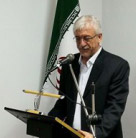 Oral history seems to be easy to ignore. Particularly in extraction; in the field of compilation, we encounter texts that suffer many forms of problems. On the one hand, it is seen that the basis is a mere interview and extraction and editing that is lacking in priorities. Therefore, in spite of the efforts of the producer, the end result does not attract readers and specialists. The other part relates to oral history inclusiveness (epidemic), including in the context of administrative requirements, which has been prepared and produced solely as a quantity report. In order to avoid the waste of time and capital as well as the unwavering and unbridled parade of low pitch content, it is necessary to consider some issues seriously in the context of the basic narrative: "We have to have some respect for oral history".
The production of basic narrative is the integral part of the compilation. The basic narrative is the main story where all aspects of the interview are involved and intended to carry the message and the main story: whether the interview is research of subject or individual-oriented or any other type of approach is adopted. In other words, the attempt of the historian is to extract the information and material hidden in the mind of the interviewer using a scholarly insight into and offer the outcome in the form of a refined and smooth content. In this way, the interviewer and interviewee can both perform the role of a narrator and a well-connected and coherent narrative should be extracted from both. In this context, in addition to having the necessary tastes and prerequisites for an oral history researcher, one has to point to a few basic elements that, in interaction and balance, can provide a more definite, believable, and readable narrative:
- Preliminary study; in the first step, it should be acknowledged that entering an interview requires the mastery of the research literature, which has already been preceded by an article on the issue. It should be noted that it is often and widespread that the interviewer, for this reason, has no control over the dimensions of his research (interview) and, therefore, is unable to meet the reader's expectations. The interviewer's competence on the turning point of the research can engineer all the necessary dimensions in the design of the questions and dialogue path and create a more logical basis in the series of questions. What about? When? Why? How? And finally up to where?...we want to inquire. In the absence of such competence, entering an interview would actually be a sacrifice of the subject and the project.
- Direct extraction (without refinement-urgent); the other issue is that immediately after the interview, the contents of the interviews without the necessary refinements and validation with reference to other documents and resources, are transcribed and published as memoirs. And they are even named as oral history. This is one of the most important harms in production of oral history.
It should be considered that production requires editing and trimming. Because the authenticity of the interview and the smoothness of oral narration should be maintained in the text as much as possible. The issue of literary editing and even documenting should not damage the narrative structure. And since it should be validated, the entire interview should not be sacrificed to the documentation. In other words, being on the path of base narrative, is subject to and transcends balance and interaction, maintaining the authenticity of interviewing and citing and documenting. There is the exception of interview oriented research where particular attention is to be paid to this point; at the same time, if the research is based on the library and literature studies, the narrative movement can be rotated entirely to the truth orbit.
- Individual experience; One of the harms to basic narrative is putting it on the path and circuit of individual experience. Constructing the original narrative based on a memory is, in fact, an expression of individual experience of the past. While in oral history the collective experience should be considered in the context of the theoretical frameworks of history. It is only the expression of a memory in the form of narration, and in spite of the general trust, it cannot be perceived as a basis of anomalous generalization and referred to as history. Only in such situations the narration will be subject to other relevant documentations.
- Note taking; another harm to the main narrative is the absence of interviewees' perceptions and memos. Undoubtedly, oral historians know that during interviews they have to record the general condition of the narrator based on their own observations and perceptions in addition to audio / video recording. These notes are in fact helpful in understanding post-interview narratives. With these notes, the gaps in the message delivered during interview might be interpret and understood. The lack of text notes in existing works is a show of a rush to production. In order to understand this gap, it is only noted that the cement (base) in the narrative interviews is necessarily derived from the interviewer's notes and reflections. In other words, the substitution of the basic interview in the form of an extraction as cement indicates this very gap.[1]
Isfahan
28 June 2019
[1] This text by Morteza Nouraie (PhD), professor of history at Isfahan University and director of Iranian Local History Association, has been previously published in Iranian Oral History Association channel @oralhistoryOHA.
Number of Visits: 6383
Share


The latest
Most visited
Call for Fundamental Questions in the Field of Oral History
The Oral History of Iran website invites all researchers, experts, professors, and activists in the field of oral history to share their views and experiences with the audience on the most important questions in this field. We ask you to raise a maximum of 10 fundamental questions in the field of oral history that every researcher, interviewer, and oral history enthusiast should think about, and write an answer for each in about 200 words.100 Questions / 43
How can narrators and interviewers reach a common understanding?We asked several researchers and activists in the field of oral history to express their views on oral history questions. The names of each participant are listed at the beginning of their answers, and the text of all answers will be published on this portal by the end of the week.
Documentary Pathology of the US Embassy Documents
The Necessity of Scientific Rereading and Content Analysis of DocumentsMore than four decades have passed since the publication of the first collections of documents from the US Embassy in Tehran. However, despite the relatively easy access to this treasure trove of documents, systematic research exploitation of it has not been adequate. We still do not have a “comprehensive picture” of the content of these 11,000 documents.
100 Questions / 42
What is the importance of the narrator and interviewers shared understanding of the past in oral history?We asked several researchers and activists in the field of oral history to express their views on oral history questions. The names of each participant are listed at the beginning of their answers, and the text of all the answers will be published on this portal by the end of the week.