 Call for Fundamental Questions in the Field of Oral History
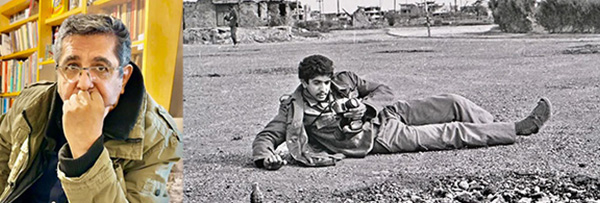 Jasem Ghazbanpour narration of the first day of the war in Khorramshahr
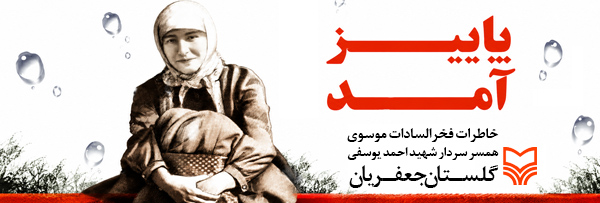 A Review of the Book the Autumn Arrived
 Theory Two: The Borderline Legitimacy Crisis of Oral History in the Academic System
 Theory One: “The Structural Duality of Opportunity–Threat in the Government’s Entry into Oral History”
 Happy Islamic Republic of Iran Day!
 Fasting in Tikrit Prison No. 16; Test of Faith in the Heart of Hardship
Theories about oral history narrated by artificial intelligence
Theory 9: Maximum usefulness
Oral history, more than being an accumulation of narratives, is a field of methodical dialogue between memory, power, ethics, and representation. In the meantime, one of the challenges for researchers in this field is to move from “interview report” to “theoretical structure”; a question to which each expert, based on his or her experience and intellectual framework, gives a different answer.Memoirs of Abdullah Nooripour
Abdullah Nooripour, the narrator of the book “He Was a Red Handkerchief,” a fighter during the Holy Defense era, was a guest on the 292nd episode of the Shab Khatereh (Night of Memories) program (July 2018). Nooripour spoke about the Red Handkerchiefs. He said: “At the very beginning of the formation of the IRGC, there were people in the Vali-Asr barracks who tested the newly arrived forces and divided them between battalions one to seven.Arranging a Conversation or Writing a Dialogue in Oral History
Oral history is the product of a purposeful conversation between the researcher and the narrator about his observations and experiences of past events. A group of researchers publishes a coherent text by eliminating questions, sometimes separating topics with multiple titles. Another group tries to preserve the structure of the conversation and bring the questions and answers together. In order for the text to be readable and usable for the audience with the structure of an interview,Experts Answer to Oral History Questions
100 Questions/ 56
Publishing oral history on social media: an opportunity or a threat?
We asked several researchers and activists in the field of oral history to express their views on oral history questions. The names of each participant are listed at the beginning of their answers, and the text of all answers will be published on this portal by the end of the week.The Third Regiment: Memoirs of an Iraqi Prisoner of War - 56
After the second Bostan operation, the 3rd Regiment was deployed as a reserve of the 5th Motorized Division 2 kilometers southwest of the Hamid barracks. The regiment, who were mentally and physically exhausted after participating in the last operation, were in dire need of rest and organization. However, the military operation gained momentum. The Iranian forces, who had resumed their mobility, after mobilizing combat resources, began their liberation ...Answering 10 Fundamental Questions in Oral History
This text was received at the request of the Iranian Oral History website and in response to the “Call for Fundamental Questions in the Field of Oral History.” In it, the author raises 10 key questions that he believes every researcher, interviewer, and person interested in oral history should think about, and writes an answer of about 200 words for each question. Submitted materials will be published on the Oral History website under the author’s name and pen name and without editing.Memoirs of Seyyed Javad Hashemi
Seyyed Javad Hashemi, a writer, actor, and warrior from the Holy Defense era, was a guest on the 291st Shab-e Khatreh (Night of Memories) program (June 2018). Hashemi spoke about Uncle Hassan Khatreh. He said: “In the army’s propaganda, we had an old man named Uncle Hassan, who was known as Uncle Hassan of the Fronts. He would run around the large field of the Dokuheh barracks ten times in the morning and never get tired.Urban Oral History: Unknown Potentials and Forgotten Identity
Cities are not just a collection of streets, buildings, squares, and civil engineering structures. Cities are the living narratives of people who have lived in them over time, spoken, made memories, and left a part of their identity in their alleys and squares. However, in many cases, what is known as the historical heritage of cities' past is limited to iconic buildings, official documents, and recorded events;Experts Answer to Oral History Questions
100 Questions/ 55
Are cyberspace micro-narratives defined under oral history?
We asked several researchers and activists in the field of oral history to express their views on oral history questions. The names of each participant are listed at the beginning of their answers, and the text of all answers will be published on this portal by the end of the week.The Third Regiment: Memoirs of an Iraqi Prisoner of War - 55
After one night, I contacted Major Sabah, the regiment commander, using a wireless device located inside an armored vehicle. He asked me to go to that area to check on the unit's health. The next night, I went to the front line in the same communications armored vehicle, driven by a skilled soldier. I sat on top of it for fear of a mine exploding under the armored vehicle's wheels.Most visited
- The Third Regiment: Memoirs of an Iraqi Prisoner of War - 55
- Urban Oral History: Unknown Potentials and Forgotten Identity
- 100 Questions/ 55
- Answering 10 Fundamental Questions in Oral History
- Memoirs of Seyyed Javad Hashemi
- 100 Questions/ 56
- The Third Regiment: Memoirs of an Iraqi Prisoner of War - 56
- Arranging a Conversation or Writing a Dialogue in Oral History
100 Questions/53
Should the interviewer point out inconsistencies in the narrative to the narrator during the interview?We asked several researchers and activists in the field of oral history to express their views on oral history questions. The names of each participant are listed at the beginning of their answers, and the text of all answers will be published on this portal by the end of the week.
Call for Fundamental Questions in the Field of Oral History
The Oral History of Iran website invites all researchers, experts, professors, and activists in the field of oral history to share their views and experiences with the audience on the most important questions in this field. We ask you to raise a maximum of 10 fundamental questions in the field of oral history that every researcher, interviewer, and oral history enthusiast should think about, and write an answer for each in about 200 words.100 Questions / 43
How can narrators and interviewers reach a common understanding?We asked several researchers and activists in the field of oral history to express their views on oral history questions. The names of each participant are listed at the beginning of their answers, and the text of all answers will be published on this portal by the end of the week.
Documentary Pathology of the US Embassy Documents
The Necessity of Scientific Rereading and Content Analysis of DocumentsMore than four decades have passed since the publication of the first collections of documents from the US Embassy in Tehran. However, despite the relatively easy access to this treasure trove of documents, systematic research exploitation of it has not been adequate. We still do not have a “comprehensive picture” of the content of these 11,000 documents.