Report of the 15th Oral History Conference; Religion and Culture -3
The Importance of Including the Principle of Interviews in Oral History Works
Maryam Asadi Jafari
Machine Translation Edited by Mandana Karimi
2026-7-9
According to the Oral History website, the 15th Iranian Oral History Conference on the topic of "Religion and Culture" was held on Thursday morning (June 11, 2026) with the participation of the Iranian Oral History Association, the National Library and Archives Organization of Iran, the Islamic Research Foundation of Astan Quds Razavi, and the Islamic Revolution Archives Center of Qom, at the Fadak Hotel in this city.
The Correct Method of Criticizing Oral History Works
The final part of this conference was organized with the focus on "narrating lived experience and critiquing oral history works" under the management of "Dr. Abolfazl Hassanabadi" and "Dr. Mohsen Kazemi". At the beginning of this section, Mohsen Kazemi pointed out the breadth of the topic of oral history, religion, and culture and its limitation based on the topics of the articles submitted to the conference. In part of his speech, he explained the goals of holding the "Oral History of Culture and Religion Conference" and said: "One of our goals was to "explain the position of oral history in the study of religion and culture," which clarifies the capacities of the oral history method for studying religious and cultural phenomena. Many religious experiences, rituals, and activities of religious institutions are not recorded in official documents and can only be retrieved through oral history narratives. This conference can show how oral history helps to understand its hidden and lived layers in society. “Reviewing the theoretical foundations of methodology,” “Reviewing the methodological challenges of recording religious experiences,” and “Methods of validating narratives” will also help to improve the standards of research in oral history. The next goal was “documenting the history of institutions,” which was addressed in the key articles by Dr. Hassanabadi, Ms. Keshti-Ara, and Dr. Azari Khakster. An important part of the articles was also dedicated to mosques, seminaries, holy places, and religious centers. Therefore, one of the goals of the conference can be to emphasize the importance of recording and documenting the history of these institutions through oral narratives.”
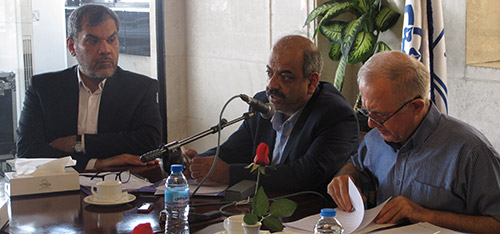
Dr. Abolfazl Hassanabadi also stated regarding the criticism of oral history works: “Oral history criticism is different from the criticism of other historical works. Because in oral history, the compiler is not the producer. When you criticize an oral history book, are you criticizing the interviewee? Or the person who compiled the book? Because the compiler has not written anything of his own in this book and has only presented to you the collection of one person's lived experience about a historical period within the framework of a taste, in the form of a book. So, a big question mark in the field of oral history criticism is whether you are criticizing the person's lived experience or the person who compiled the work? There is another discussion in the field of hard book criticism, which includes the cover, the way it is compiled, and the presentation. But in any case, the essence of the content of oral history is the narrative of the person who has expressed his memories. »
Can an individual’s narrative be generalized to the oral history of an institution?
Then Mina Moeini presented her article titled “A Critique of the Book of Oral History of the Najaf Seminary; Thoughts, Currents, and Events,” an excerpt of which you will read below: “Many of the intellectual, political, and social developments in the history of the Najaf Seminary are based on the experience of those who lived and worked there. From this perspective, the book “Oral History of the Najaf Seminary” is important. Because it records the narrative of one of the active and enduring figures of the Najaf Seminary, and Ayatollah Asefi is a figure who has been present in the scientific, social, and political arenas. This book is a collection of interviews between Mohammad Javad Sahebi and Ayatollah Mohammad Mahdi Asefi, compiled with the efforts of Saeed Rousta Azad and published by the Qom Book Garden Institute. In this work, his experiences and observations on various aspects of the scientific and intellectual life of the Najaf Seminary are discussed. Technically and visually, this book is considered a high-quality and professional work that meets all publishing standards, from cover design and printing to editing. The text of the book is fluent and precise, and due to the author's scientific mastery of research methods, the material is organized and precise, making it easy for the audience to read. However, the lack of a final conclusion at the end of the book is felt. There is also a lack of clear information about the archive of interview audio files. The author and editor do not mention the archive of interview audio files, and researchers almost do not have access to these files. But overall, the publication of this work by a reputable publisher such as the Qom Book Garden Institute demonstrates scientific accuracy and multi-stage supervision of the book's content. Some of the weaknesses of the book include the length of some answers, the accumulation of diverse topics in one chapter, the interference between memory, analysis or scientific lecture, and the mixing of descriptive-analytical tone with analytical texts. It would have been appropriate for the editor of the book to use more subheadings in the book. In terms of oral history, this book should also be considered an example of research in the field of oral history, which was formed based on direct conversations with Ayatollah Asefi and narrated the oral history of the Najaf seminary from the angles of this person's personal and lived experience in Najaf. The interviewer, by asking precise questions, tried to extract historical details from the narrator's memory and examine the narrative of his personal life in the context of the intellectual and political developments in the Najaf seminary. Ultimately, this work, in terms of historical content, is a very valuable source for understanding the developments in the Najaf seminary in the contemporary period, and the book contains first-hand and unique information that is very important.
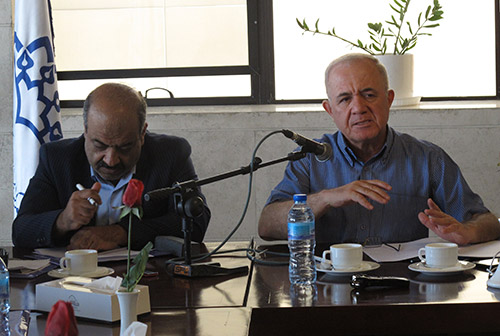
Mohsen Kazemi, who reviewed all the articles presented at the 15th Oral History Conference and whose details will be published in the conference book, in part of his speech criticized Mina Moeini's article as follows: "This article was one of the most prolific articles in terms of volume and scientific literature. However, this does not prevent us from seeing several fundamental methodological and conceptual issues. The most important point is that the article is, on the surface, a book review. But in practice, it is more about explaining and retelling the content of the book in detail. The ratio of criticism and analysis to description is not very balanced. Also, this fundamental question overshadows the text: can we call the narratives of one person the oral history of the Najaf Seminary? Both in the title of the book and in the analysis of the article, this narrative is presented in such a way that it seems that the narrator represents the oral history of the Najaf Seminary. This conceptual generalization is a matter of serious reflection. This is also the greatest challenge of this book. Because the oral history of a complex scientific-social institution, such as the Najaf Seminary, requires a wide range of diverse narratives of various discussions, trends, and situations that have come and gone. Relying on the narrative of one person, however important and influential, cannot alone represent the oral history of an institution that is several hundred years old. Rather, it is a cell in a network. Abolfazl Hassanabadi also stated: “For about 10 years now, the issue of the influence of retrospective thinking on early narratives has been a subject of debate in the world, and oral history activists around the world have been asking how a person, in their current position, can go back to a situation 40 or 50 years ago and start talking about it? Because it is very difficult to do this without separating themselves from today’s perspective. Of course, the emphasis has always been on conducting interviews in their own context, time, and place. But recently, it has become accepted in the world that two types of oral history narratives are presented at the time of recording. One narrative is a retrospective narrative that is taken in one’s own time. Another narrative is the individual’s present-day narrative of the past. This method will not compromise the essence of the content, and the view he presents today of an event in his time is an analytical view that was created in his mind following a lived experience and is now accepted in the world. Finally, it is recommended that we record both narratives.”
The necessity of access to the original interviews to criticize oral history works
The next article, titled “Oral History of the Chaharmardan Mosque of Qom and its Role in Contemporary Social and Revolutionary Developments,” was presented by “Dr. Seyyed Hassan Qureshi.” This article reviewed the construction of this mosque and its functions from the 1930s to the victory of the Islamic Revolution, the imposed war, and thereafter, based on oral history interviews.
The last article, titled “A Review of the Book of Mr. Teacher: Memoirs of Professor Hossein Nowruzian,” was presented by “Samira Mosaibi.” An excerpt from it is as follows: “This book was published by Ali Mohammadi. He has played all three roles of interviewer, editor, and writer. This book deals with the life, artistic activities, and lived experience of a cultural activist in Qom. Since oral history relies on memory and individual narratives, it raises scientific criticisms about credibility and bias. Therefore, my main question in this review was to what extent does the book “Mr. Teacher” comply with the methodological criteria of oral history? This book is the result of 6 interviews with Hossein Norouzian and interviews with 7 of his relatives and is classified as an oral history work. The intelligent and under-studied subject selection [the narrator was a music and calligraphy teacher], the narrative coherence of the book [it starts from childhood and progresses continuously], the absence of chapter divisions, the fluidity of the prose, and attention to the general audience are some of the characteristics of this book. The language of the book is simple and fluent. The author has avoided complex terms and has mentioned things in the footnotes where additional explanation was needed. It seems that Ali Mohammadi has used the open interview and open question pattern. The structure of the questions in this book has been completely eliminated, which is not a defect. This is a conscious choice in compiling character-oriented books. But as a researcher, I expected that they would provide an explanation about the question package in the introduction to the book. Second, there is an audio archive of the interviews in the Qom Islamic Revolution Documents Center. It is expected that a list of interview sessions, including the duration of the interviews, etc., will be mentioned in the book. The next point is about the many images published in the book. About 100 pages of photos have been printed in the book, which are very valuable. But it should have been mentioned where the source of these images is? Because no reference has been given to the images. In part of his critique of Samira Musayebi's article, Kazemi said: "This article has a systematic structure in terms of theoretical awareness and is a defensible work at an average to high level in terms of methodological standards. However, its critique is more of a critical commentary than a deep analysis. The article did not fully realize its theoretical potential and could have shown, through a case study analysis, several parts of the book's narrative where the work under review falls on the spectrum of memoir or analytical oral history. Ultimately, the value of this article is that it opens the door to a discussion about the scientific criteria of oral history and shows that the critique of works in this field is part of the process of producing historical knowledge."
Dr. Hassanabadi also clarified: "For about 10 years now, the influence of hindsight on early narratives has been a subject of debate around the world, and oral history activists around the world have been asking how a person, in their current position, can go back to a situation 40 or 50 years ago and start talking about it? Because it is very difficult to do so without separating themselves from today's perspective. Of course, the emphasis has always been on conducting interviews in their own context, time, and place. But recently, it has become accepted in the world that two types of oral history narratives are presented at the time of recording. One narrative is a prior narrative that is taken in their own time. Another narrative is the person's present-day narrative of the past. This method will not compromise the essence of the content, and the perspective that they present today of an event in their own time is an analytical perspective that has been created in their mind following a lived experience and is now accepted in the world. “Finally, it is recommended that we record both narratives.”
The necessity of access to the original interviews for the critique of oral history works
The next article, entitled “Oral History of the Chaharmardan Mosque of Qom and its Role in Contemporary Social and Revolutionary Developments,” was presented by “Dr. Seyyed Hassan Qureshi.” This article reviewed the construction of this mosque and its functions from the 1930s to the victory of the Islamic Revolution, the imposed war, and thereafter, based on oral history interviews.
The last article, entitled “A Review of the Book of Mr. Teacher: Memoirs of Professor Hossein Nowruzian,” was presented by “Samira Mosaibi.” An excerpt from it is as follows: “This book was published by Ali Mohammadi. He has assumed all three roles of interviewer, editor, and writer. This book deals with the life, artistic activities, and lived experience of one of the cultural activists of Qom. Since oral history relies on memory and individual narratives, it raises scientific criticisms about validity and bias. Therefore, my main question in this review was to what extent does the book “Mr. Teacher” comply with the methodological criteria of oral history? This book is the result of 6 interviews with Hossein Norouzian and interviews with 7 of his relatives and is classified as an oral history work. The intelligent and under-examined choice of subject [the narrator was a music and calligraphy teacher], the narrative coherence of the book [it starts from childhood and progresses continuously], the absence of chapter divisions, the fluidity of the prose, and attention to the general audience are some of the characteristics of this book. The language of the book is simple and fluent. The author has avoided complex terms and has mentioned some points in the footnotes where additional explanation was necessary. It seems that Ali Mohammadi used the open interview and open question pattern. The question structure in this book has been completely eliminated, which is not a defect. This is a conscious choice in compiling character-oriented books. But as a researcher, I expected an explanation of the question package in the introduction to the book. Second, there is an audio archive of the interviews in the Qom Islamic Revolution Documents Center. It is expected that the book will include a list of interview sessions, including the duration of the interviews, etc. The next point is about the many images published in the book. About 100 pages of photos have been printed in the book, which are very valuable. But it should have been mentioned where the source of these images is? Because no reference has been given to the images. In part of his critique of Samira Mossibi's article, Kazemi said: "This article has a systematic structure in terms of theoretical awareness and is a defensible work at an average to high level in terms of attention to methodological standards. However, its critique is more of a critical commentary than a deep analysis. The article did not fully realize its theoretical capacity and could have shown, through a case study analysis, several parts of the book's narrative where the work under review falls on the spectrum of memoir or analytical oral history. Ultimately, the value of this article is that it opens the door to a discussion about the scientific criteria of oral history and shows that the critique of works in this field is part of the process of producing historical knowledge."
Dr. Hassanabadi also clarified: "Since oral history began in Iran, it has been based on written publication. But when major projects are carried out in the world, they are immediately posted on the website. When the original audio of oral history projects is posted on the site, many of these issues are no longer raised. Because we have the raw material. When it is edited, many of these issues are raised. When you want to examine the original oral history interview, you examine the interviewer, the type of questions, the purpose of the question, and the atmosphere of the interview. Many of our sources are not available due to the written approach. We had previously suggested that the CD of the interview be included with the book so that critics can examine the original material with the book.”
In the continuation of the 15th Iranian Oral History Conference, Seyyed Mohsen Mohseni, a member of the Qom Studies Foundation, Dr. Ranjbar, a researcher in the field of oral history of Qom carpets, and Reza Kouchakzadeh, a researcher in the field of Ta’ziyeh and oral history of Qom, explained their activities in the field of oral history. At the end, a roundtable discussion and conclusion of the conference was held by Dr. Mohsen Kazemi and Dr. Abolfazl Hassanabadi.
Number of Visits: 6



The latest
- Report of the 15th Oral History Conference; Religion and Culture -3
- 100 Questions / 37
- "Second Generation Oral History" is Based on a Critical Perspective and Historical Semantics
- A Pilgrim's Narrative of Post-War Mashhad
- The Third Regiment: Memoirs of an Iraqi Prisoner of War Doctor - 37
- 374th Night of Remembrance - 1
- 100 Questions / 36
- The Underground City of Tehran
Most visited
- The Underground City of Tehran
- Report of the 15th Oral History Conference; Religion and Culture -2
- The Third Regiment: Memoirs of an Iraqi Prisoner of War Doctor - 36
- 100 Questions / 36
- The Third Regiment: Memoirs of an Iraqi Prisoner of War Doctor - 37
- 374th Night of Remembrance - 1
- A Pilgrim's Narrative of Post-War Mashhad
- "Second Generation Oral History" is Based on a Critical Perspective and Historical Semantics
Validation: Challenges and Necessities
Where does truth stand in oral history? How can the correctness of a narrative be recognized? Does fact-checking matter? If there is exaggeration in the reporting of some accounts, how can it be detected? Is it possible to record an event accurately through the recording of a narrative? Readers and users of oral history works are often faced with these questions, and sometimes encounter doubts about some oral history works.From Revolutionary Circles to the Military Arm of the Islamic Government
In those days, it became clear that certain institutions had to be established very quickly—institutions suited to the temperament, expectations, and lingering aspirations of the younger generation; young people who had been politically active before the Revolution and, in some cases, had been directly entangled in arrests, imprisonment, ...Authenticating Oral History: From Possibility to Necessity
The use of oral history as one of the historical sources has long been one of the principal challenges facing oral historians and those who employ it in contemporary historiography. The development of international standards for oral history, as well as IRIB standards, was intended to address the criticisms raised in this regard. The relationship between Diplomatics in written records and oral history is reciprocal.100 Questions/27
What is the place of research ethics in compiling oral history?We asked several researchers and activists in the field of oral history to express their views on oral history questions. The names of each participant are listed at the beginning of their answers, and the text of all answers will be published on this portal by the end of the week.