Hiroshima Travelogue - Episode 14
We should have arrived at the train station about noon. We had some time to go for shopping before the train moved. We went to a mall we had not been able to see before. It wouldn’t open before ten so we idle about a little while. There was this 100-yen shop which sold everything from a washing mitt to a shovel at 100 yens. We turned about in the shop for an hour. I also sneaked in an Adidas shop to buy myself a discounted shirt. There were some other shops with x% off prices. I was beaten by the prices with the feeble currency I had with me.
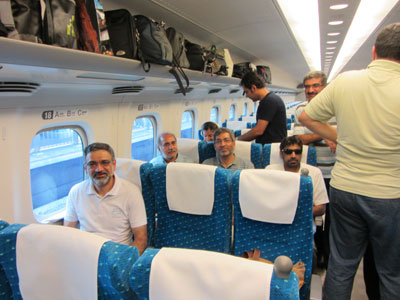
As planned before, we headed to the Shinkansen Station. We were accompanied with our hosts. We received Mc Donald's again as our meal and departed in an ambience of kindness, respect and politeness. The train started its journey sharp according to the schedule and we were in Tokyo four hours later. The sun was about to set as we moved to Iran's embassy.
Having just arrived, we visited Iran's cultural negotiations venue. They said a ceremony was being held there on the occasion of Ramadan. The venue is located a little far from Iran's embassy in Tokyo. A number of Iranians living in Tokyo had attended the ceremony. There was not enough room for everyone. A two-man Iranian band played their instruments and sang songs for the audience. Later on, a Japanese band played a live piece. The ceremony's emcee, Iran's Cultural attaché to Japan delivered a speech and an Iranian reporter from Japan's N.H.K wanted to talk to me but I declined. They brought us Qormeh Sabzi (Persian herb stew) for Iftar and we started eating.
During our comeback I saw the Eiffel Tower once again. The Japanese have built a replica of the original French one in Tokyo. This is not all, they have recreated many western architectural symbols in the city from around the world; could it be for attracting tourists or for telling the world that they can, I did not figure out. Or maybe they intended to say that they enjoy whatever great things all others have.
My understanding is that such buildings do nothing to add value to Japan. A country whose cars have covered most of the streets in the world and whose cyber developments have occupied work desks needs not such unnecessary formalities.
Hedayatollah Behboudi
Translated by: Abbas Hajihashemi
Number of Visits: 5986
Share


The latest
Most visited
- The Third Regiment: Memoirs of an Iraqi Prisoner of War-51
- Encountering Oral History from a Theatrical Perspective
- A year of non-stop questioning
- 100 Questions/51
- Memories of Mrs. Jumay Ahmed Karoufi
- The Third Regiment: Memoirs of an Iraqi Prisoner of War - 52
- 374th Night of Remembrance - 3
- 100 Questions/ 52
Call for Fundamental Questions in the Field of Oral History
The Oral History of Iran website invites all researchers, experts, professors, and activists in the field of oral history to share their views and experiences with the audience on the most important questions in this field. We ask you to raise a maximum of 10 fundamental questions in the field of oral history that every researcher, interviewer, and oral history enthusiast should think about, and write an answer for each in about 200 words.100 Questions / 43
How can narrators and interviewers reach a common understanding?We asked several researchers and activists in the field of oral history to express their views on oral history questions. The names of each participant are listed at the beginning of their answers, and the text of all answers will be published on this portal by the end of the week.
Documentary Pathology of the US Embassy Documents
The Necessity of Scientific Rereading and Content Analysis of DocumentsMore than four decades have passed since the publication of the first collections of documents from the US Embassy in Tehran. However, despite the relatively easy access to this treasure trove of documents, systematic research exploitation of it has not been adequate. We still do not have a “comprehensive picture” of the content of these 11,000 documents.
100 Questions / 42
What is the importance of the narrator and interviewers shared understanding of the past in oral history?We asked several researchers and activists in the field of oral history to express their views on oral history questions. The names of each participant are listed at the beginning of their answers, and the text of all the answers will be published on this portal by the end of the week.