A Pictorial Chronicle of a Surgeon’s Years of War and Healing;
Photo Album from The Doctor of fly
Translated by Kianoush Borzouei
2026-4-22
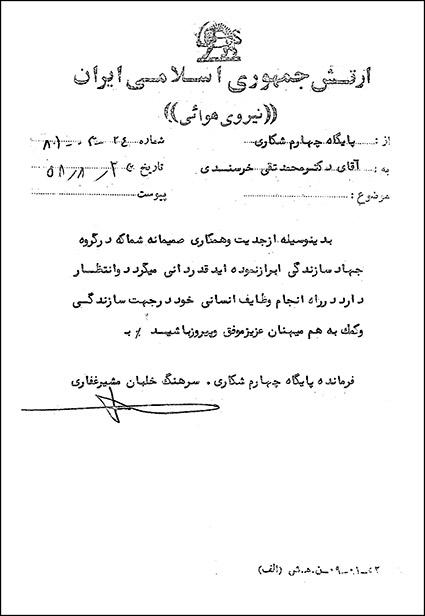
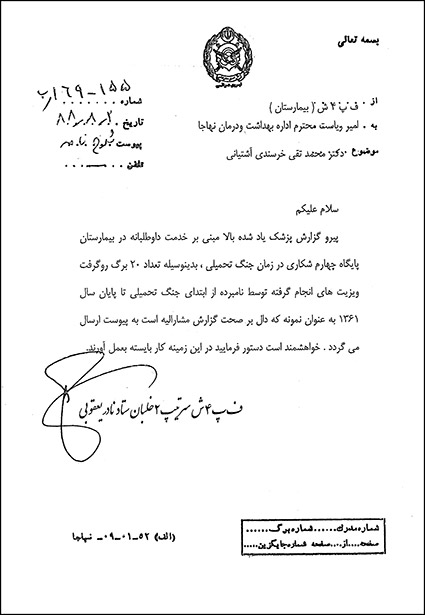
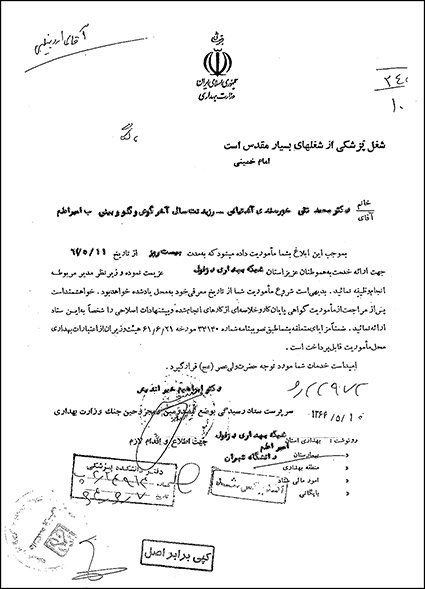
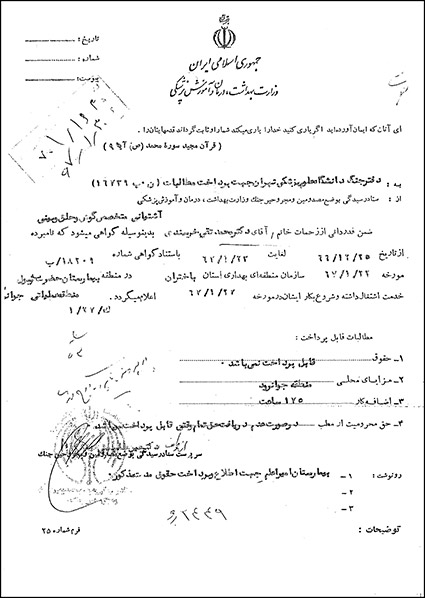
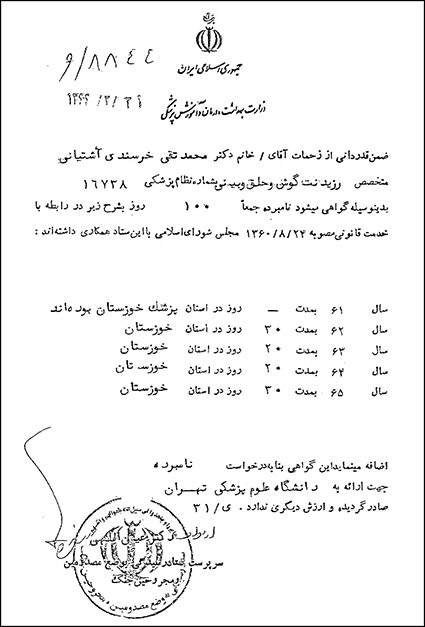
The Doctor of fly, authored by Fatemeh Dehghan Niri, presents the memoirs of Dr. Mohammad-Taqi Khorsandi Ashtiani, Professor Emeritus and a subspecialist in Otolaryngology at Tehran University of Medical Sciences. Compiled within the framework of oral history, the work recounts different stages of his life—from childhood and years of study at home and abroad to his devoted and memorable presence in the Sacred Defense years and the period that followed. Among the most documentary and compelling features of oral history works is invariably the photo album, which breathes life into the narratives of the book. In the following pages, you are invited to view the photographs and archival documents appended to The Flying Doctor, which capture enduring moments from his years of medical service, steadfastness, and presence in operational zones.
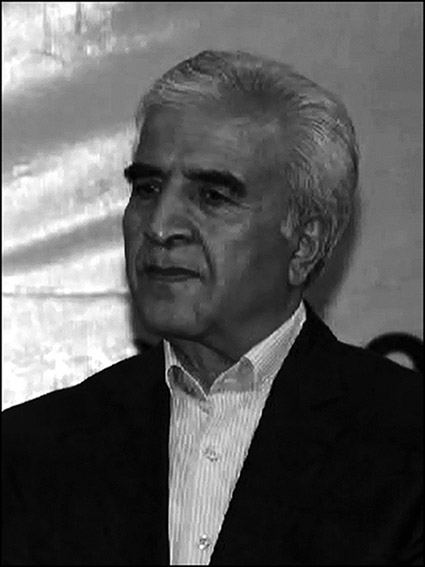
First photo: Dr. Mohammad-Taqi Khorsandi Ashtiani, university professor, subspecialist in otolaryngology, and head and neck surgeon
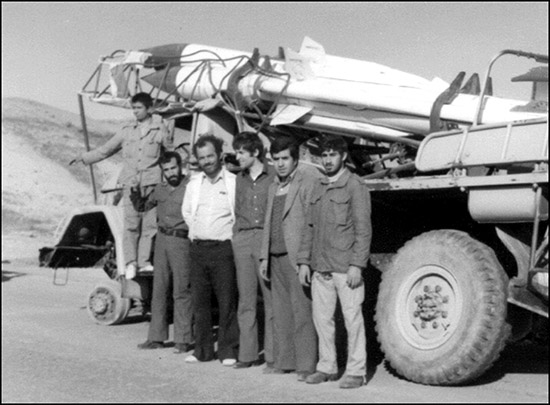
Secend photo: Dezful, 1981, after Operation Fath al-Mobin, second from the right
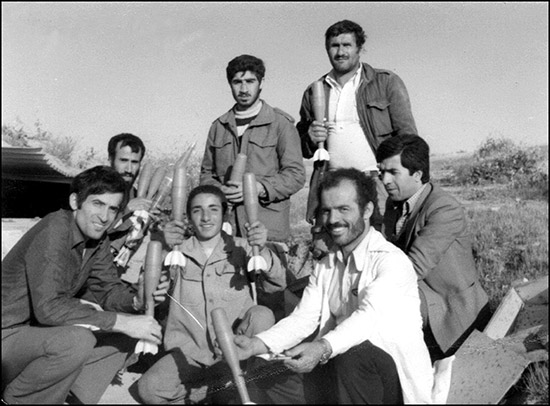
Third photo: After Operation Fath al-Mobin, ordnance left behind in an Iraqi bunker
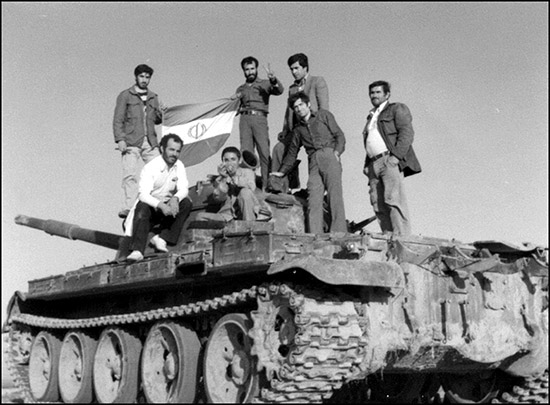
Fourth photo: Dr. Khorsandi, together with a medical assistant and IRGC forces, on a captured tank
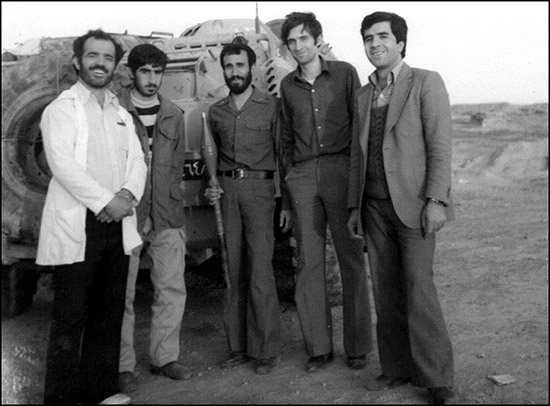
Fifth photo: Dr. Khorsandi, first from the right
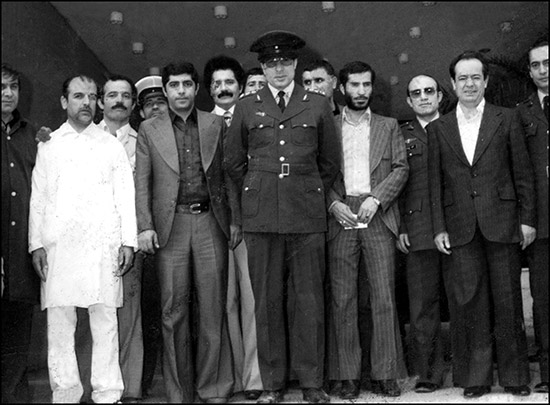
Sixth photo: Dr. Khorsandi beside Major General Pilot Fakouri (martyr) during his visit to Vahdati Air Base Hospital
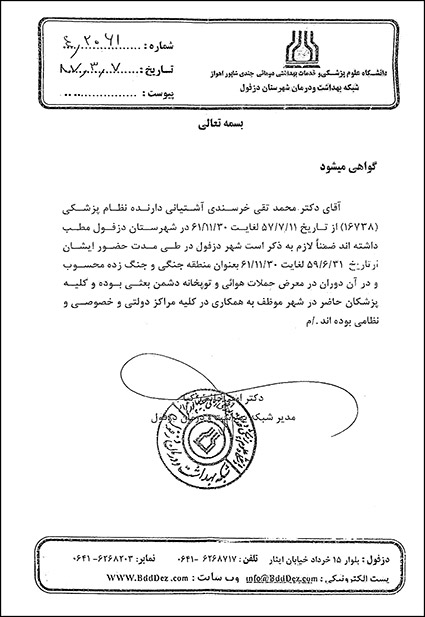
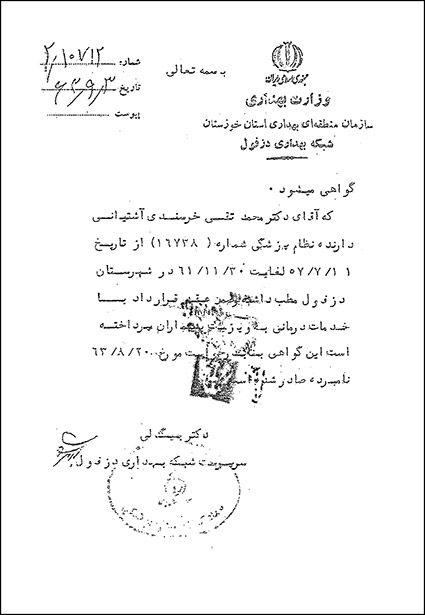
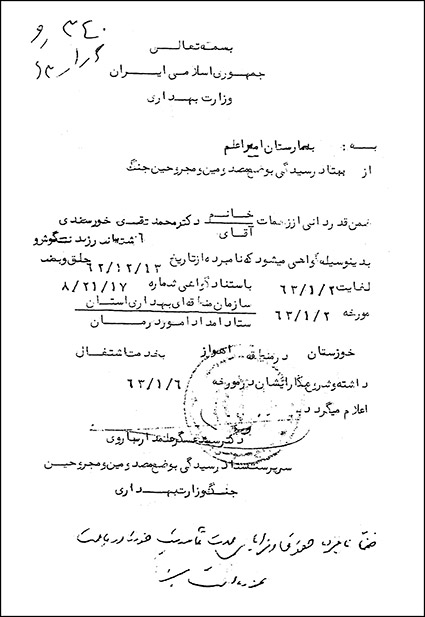
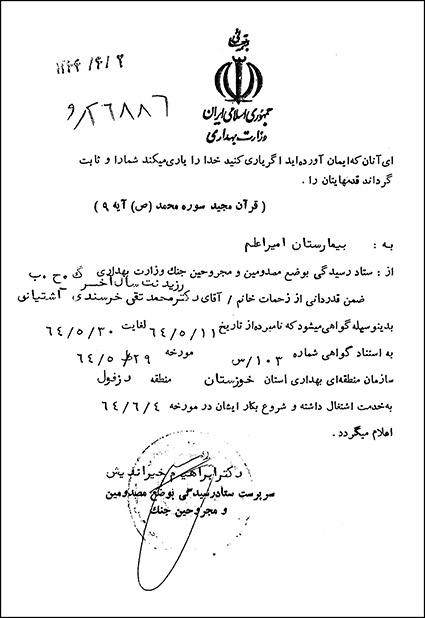
***
Number of Visits: 455



The latest
- Rahim Afshar's Memories
- The Story of the First Sacred Defense Book Award
- Oral History and Social Resilience in Hard Times
- 100 Questions/ 34
- Third Regiment: Memoirs of an Iraqi Prisoner of War Doctor – 34
- A Review of Scientific and Operational Strategies for Overcoming the Erosion of Narrators’ Memory
- 100 Questions/ 33
- Expert Panel Session on Oral History of the Country – (Part 2)
Most visited
- Third Regiment: Memoirs of an Iraqi Prisoner of War Doctor – 33
- Expert Panel Session on Oral History of the Country – (Part 2)
- 100 Questions/ 33
- Memoirs of Ahmad Nabavi
- A Review of Scientific and Operational Strategies for Overcoming the Erosion of Narrators’ Memory
- Third Regiment: Memoirs of an Iraqi Prisoner of War Doctor – 34
- 100 Questions/ 34
- Oral History and Social Resilience in Hard Times
Validation: Challenges and Necessities
Where does truth stand in oral history? How can the correctness of a narrative be recognized? Does fact-checking matter? If there is exaggeration in the reporting of some accounts, how can it be detected? Is it possible to record an event accurately through the recording of a narrative? Readers and users of oral history works are often faced with these questions, and sometimes encounter doubts about some oral history works.From Revolutionary Circles to the Military Arm of the Islamic Government
In those days, it became clear that certain institutions had to be established very quickly—institutions suited to the temperament, expectations, and lingering aspirations of the younger generation; young people who had been politically active before the Revolution and, in some cases, had been directly entangled in arrests, imprisonment, ...Authenticating Oral History: From Possibility to Necessity
The use of oral history as one of the historical sources has long been one of the principal challenges facing oral historians and those who employ it in contemporary historiography. The development of international standards for oral history, as well as IRIB standards, was intended to address the criticisms raised in this regard. The relationship between Diplomatics in written records and oral history is reciprocal.100 Questions/27
What is the place of research ethics in compiling oral history?We asked several researchers and activists in the field of oral history to express their views on oral history questions. The names of each participant are listed at the beginning of their answers, and the text of all answers will be published on this portal by the end of the week.