The Invisible Deep Rivers
Written by: Mostafa Fa'alehgari
Translated by: M.B. Khoshnevisan
The oral literature of each period or day is like the flowing waters in the deep land, the flowing rivers that sometimes remained no name or address on the great soil of a land. No doubt, the oral literature of the sacred defense period emerged five months after the all-out invasion of Saddam's army (backed by all the world's militarists of that time). The beautiful and ancient city of 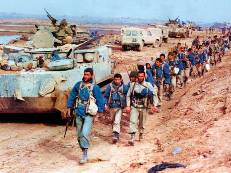 Saddam's army against the Iranian soil. The people of Qasre- Shirin still did not know the whistle of a canon shell. They thought that it was the siren of an ambulance. Most people didn't know that a horrible war had been waged and that those bursting sounds came from the canon shells of the tanks which were launched from that side of the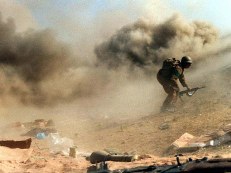
We can interpret unlimitedly from this cultural source. But I should warn that our ability and interpretations from this deep river is accomplished when it is not being late. The oral literature of the sacred defense has been emerged in a period that if we don't do anything for its amass and recovery, it'll be forgotten. Everybody must rise up, all those who have ears for hearing, hearts for breaking, hands for writing and thoughts for recovering, and both realize and recover the deepness of the oral literature of the sacred defense. The state cultural officials, historians, novel writers, screenwriters must introduce the oral history of the amazing period of the people's eight-year resistance against a full-armed military. They should hurry up. The generations of those years are becoming old. Many of the elders of the sacred defense period are not among us anymore and we really miss them. We should be aware. Many people who are earning their living secretly inside our community don't know a phenomenon named oral literature. This is up to us to introduce it to them. They in the plants, farms, on the seas, rivers and plains, in the street towns, and maybe in the capital, in the schools and universities and everywhere in this large
Historical notes, short stories, novels, dramas, features and telefilms and great musical works will emerge from the deepness of the invisible rivers of the Iranian people's sacred defense oral literature, if those who can do anything rise and start working. When Tolstoy, the ever greatest author of western modern literature found the pre-shocks of tendency towards writing "War and Peace", he did not merely relied on or contented himself with his own bravery when serving in the army for artistic writing of the Russian people's resistance against the invasion of Napoleon Bonaparte army. This Russian author went among the people and delivered speeches about this resistance beside their rivers. Now the people remember the greatness of that epic. The author of "War and Peace" both heard his whisper and accepted deeply their uproar.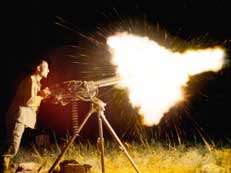
His work was so immense that the great epic of "War and Peace" became an integral part of the oral history and literature. And this popular, national and human epic has incited and will incite not only the revolutionary intellectuals, not only the advocates of fiction, not only the lovers of the unique literature of Russia's 19th century, but also many of the world's ordinary and elite story lovers, book readers and researchers. Backing the remained literature of a period, an event as well as about a special figure has helped many great artists. Two historical novels of Gabriel Garcia Marquez, "One Hundred Years of Solitude" and "The Autumn of Patriarch" caused realistic power by sitting in the corner of the rivers of the people's oral literature. For informing more about the horrible and legendary event of massacring the workers of Columbian banana farms in 1928, he listened to many of those who still remembered well the massacre of farm workers and some of them were both supportive of the killers and some had heard the horrible sound of executions by shooting and had their stories in mind so that someone like Gabriel Garcia Marquez came and listened to. The invisible rivers of the oral literature have filled the lagoons, lakes and seas of all arts. The glorious movies of "John Ford" about the American history and life, and various epics of "Akira Korosava" about the history and culture of Japanese people are full of rivers of oral literature.
Many books, movies and musical texts can be created about the eight-year resistance of the Iranian people. In order to discover the deepness and increasing the facts of theses artistic unborn phenomena, we must soon understand those who are among us and their chests are full of flowing rivers, the rivers which flow among us just one time and we cannot revive them and will die sooner or later.
The oral history of the sacred defense, deep, clear and invisible has been created in a period that if we do not rise up powerfully in order to find and save it, it'll be forgotten. Everybody should rise. Those who have ears for hearing, hearts for breaking and hands for writing and thoughts for artistic recovering should rise up.
Soureh Monthly Magazine/ No.36/ Jan, Feb, March 2008
Number of Visits: 8700



The latest
- Third Theory: Covering up the gaps in the document with oral narration
- 100 Questions/35
- Javad Poyanfar's Memories
- Report of the 15th Oral History Conference; Religion and Culture -1
- Third Regiment: Memoirs of an Iraqi Prisoner of War Doctor – 35
- Rahim Afshar's Memories
- The Story of the First Sacred Defense Book Award
- Oral History and Social Resilience in Hard Times
Most visited
- 100 Questions/ 34
- Third Regiment: Memoirs of an Iraqi Prisoner of War Doctor – 34
- The Story of the First Sacred Defense Book Award
- Oral History and Social Resilience in Hard Times
- Rahim Afshar's Memories
- Report of the 15th Oral History Conference; Religion and Culture -1
- Third Regiment: Memoirs of an Iraqi Prisoner of War Doctor – 35
- Javad Poyanfar's Memories
Validation: Challenges and Necessities
Where does truth stand in oral history? How can the correctness of a narrative be recognized? Does fact-checking matter? If there is exaggeration in the reporting of some accounts, how can it be detected? Is it possible to record an event accurately through the recording of a narrative? Readers and users of oral history works are often faced with these questions, and sometimes encounter doubts about some oral history works.From Revolutionary Circles to the Military Arm of the Islamic Government
In those days, it became clear that certain institutions had to be established very quickly—institutions suited to the temperament, expectations, and lingering aspirations of the younger generation; young people who had been politically active before the Revolution and, in some cases, had been directly entangled in arrests, imprisonment, ...Authenticating Oral History: From Possibility to Necessity
The use of oral history as one of the historical sources has long been one of the principal challenges facing oral historians and those who employ it in contemporary historiography. The development of international standards for oral history, as well as IRIB standards, was intended to address the criticisms raised in this regard. The relationship between Diplomatics in written records and oral history is reciprocal.100 Questions/27
What is the place of research ethics in compiling oral history?We asked several researchers and activists in the field of oral history to express their views on oral history questions. The names of each participant are listed at the beginning of their answers, and the text of all answers will be published on this portal by the end of the week.