Hiroshima Travelogue - Episode 11
We move out of the Chugoku daily; exactly called the Chugoku Shimbun daily. They say it circulates some 700,000 copies every day. It will publish an article about the meeting between members of [Iran’s] Peace Museum (us) and survivors of the atomic bombings of Hiroshima.
Here we go to the Peace Park. Everything seems to be ready to the upcoming ceremony. Erected in a corner of the park is a monument to the Hiroshima Bombing with a map of the building at its entrance and a structure at the end with a Japanese epigraph and a large clock showing 8:15; the exact time of the bombing on August 6th 1945. The clock is wet; water pours over the clock and forms a little pond about it as a memorial to those who perished out of thirst and injury. The debris garnered from the ruins of the bombing is placed about the pond.
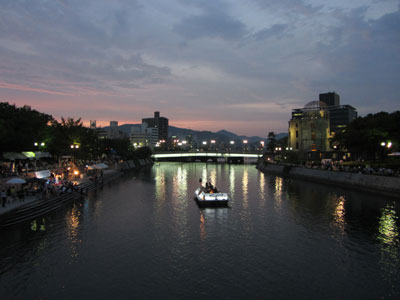
The river beside the Peace Park; the picture shows the remnants of a dome structure which have survived the Hiroshima bombings.
We step in a steep path to reach the main building of the complex. The bomb hit the ground some 200 meters away north east of the complex. The building’s entrance is decorated with innumerable pictures of probably the event’s victims. We keep on our way down the steep path anti-clockwise to get to the main hall; to the day of the bombardment.
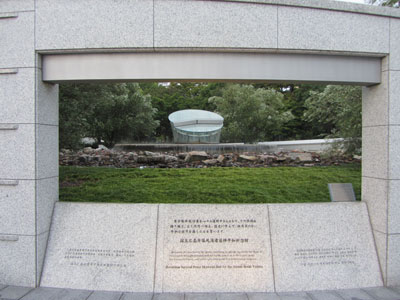
Entrance of the Monument
Here is a round structure with a 360 degree view. It is constructed with over 140,000 pieces to resemble those killed directly or indirectly in the bombing until the end of 1945. 12 pillars keep the structure up and are said to be the link between present and the past; or the alive and the dead. Right in the middle of the round structure is the time 8:15 inscribed on a stone watch covered with water current. The monument abounds with meaning despite simplicity.
We also pop in other spots of the Hiroshima memorial complex during our visit. Numerous screens are placed in a hall to give visitors information of any kind about the A-bomb attack in the city. Visitors are also allowed to access archives of memoirs belonging to the survivors and their pictures of the incident. All the data is available in Japanese, English, Chinese and Korean.
***
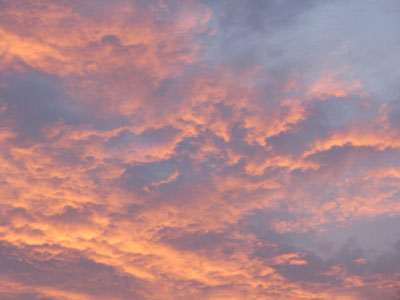
The sunset in Hiroshima
Accompanied with some of our group members who still could and would continue the visit, we went to the riverside as the sun was about to set. Music could be heard from the river bank. The players played it flawlessly. It is like it’s being played in memory of the August 6 victim. Here are individuals from the green and black continents not to mention the attending Japanese. A backpacking lad happens to realize that we are from Iran and comes closer. He says he is from Canada and calls US President Obama’s name several times. I don’t know what he is thinking but he smells of booze as I take a picture with him.
Hedayatollah Behboudi
Translated by: Abbas Hajihashemi
Number of Visits: 5969
Share


The latest
- Family History; A Legacy for Future Generations
- Oral History News for August 23rd – September 22nd 2026
- Report of the Third Meeting of the Specialized Roundtable on Oral History of the Country
- 100 Questions/50
- The Third Regiment: Memoirs of an Iraqi Prisoner of War - 50
- Narrative and the "War of Narratives" in the Era of Resistance and Imposed Wars
- Memories of Mohammad Boloori
- Call for Fundamental Questions in the Field of Oral History
Most visited
- The Third Regiment: Memoirs of an Iraqi Prisoner of War - 49
- 100 Questions/49
- Narrative and the "War of Narratives" in the Era of Resistance and Imposed Wars
- Call for Fundamental Questions in the Field of Oral History
- Memories of Mohammad Boloori
- The Third Regiment: Memoirs of an Iraqi Prisoner of War - 50
- Report of the Third Meeting of the Specialized Roundtable on Oral History of the Country
- 100 Questions/50
100 Questions / 43
How can narrators and interviewers reach a common understanding?We asked several researchers and activists in the field of oral history to express their views on oral history questions. The names of each participant are listed at the beginning of their answers, and the text of all answers will be published on this portal by the end of the week.
Documentary Pathology of the US Embassy Documents
The Necessity of Scientific Rereading and Content Analysis of DocumentsMore than four decades have passed since the publication of the first collections of documents from the US Embassy in Tehran. However, despite the relatively easy access to this treasure trove of documents, systematic research exploitation of it has not been adequate. We still do not have a “comprehensive picture” of the content of these 11,000 documents.
100 Questions / 42
What is the importance of the narrator and interviewers shared understanding of the past in oral history?We asked several researchers and activists in the field of oral history to express their views on oral history questions. The names of each participant are listed at the beginning of their answers, and the text of all the answers will be published on this portal by the end of the week.
Validation: Challenges and Necessities
Where does truth stand in oral history? How can the correctness of a narrative be recognized? Does fact-checking matter? If there is exaggeration in the reporting of some accounts, how can it be detected? Is it possible to record an event accurately through the recording of a narrative? Readers and users of oral history works are often faced with these questions, and sometimes encounter doubts about some oral history works.